OrderMap vs SpotGamma: From Gamma Context to the Auction
Compare specialized options positioning research with a connected futures workflow, and learn how to evaluate models without confusing them with signals.
By OrderMap Research4 min read
On this page
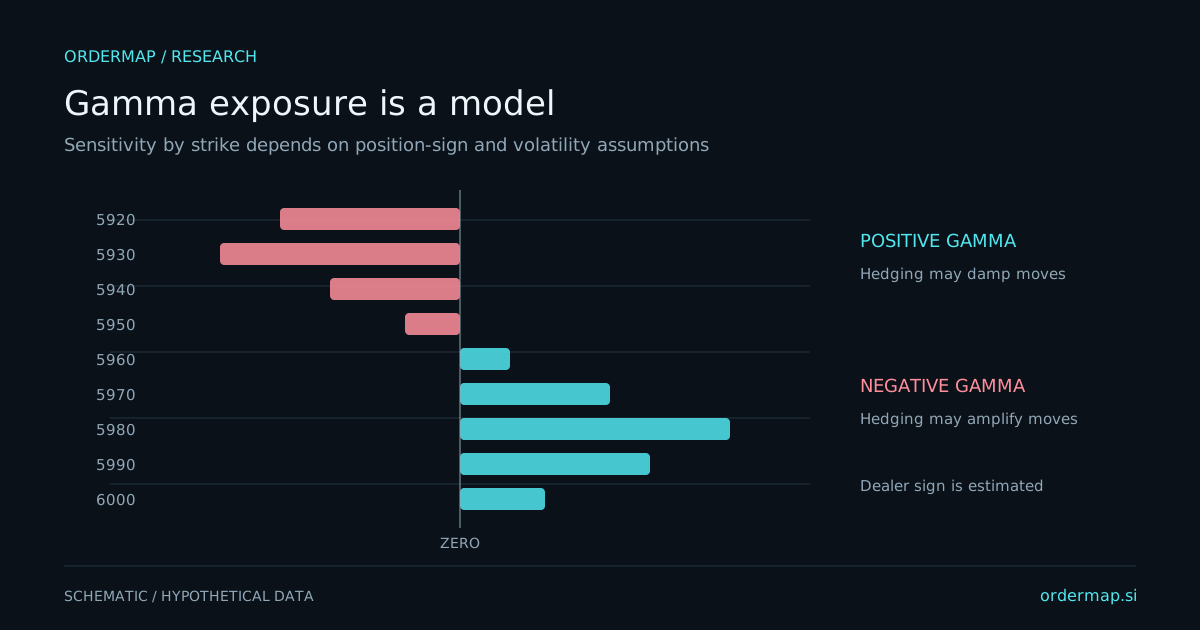
The strongest reason to compare gamma platforms is to understand how each one connects a model to a trading decision. A strike with a large exposure estimate may deserve attention, but a chart line does not reveal the entire dealer book, and it does not tell you how your traded instrument will respond when it gets there.
This article reviews public information available on October 19, 2026. OrderMap owns this publication and sells its own product. Our conclusions are editorial workflow judgments, not independent testing of SpotGamma's models, latency or trading performance.
What SpotGamma documents
SpotGamma describes TRACE as a view of options influence on SPX using its proprietary inventory model and gamma, delta-pressure and charm-pressure perspectives. It describes HIRO as an indicator of the hedging impact of options activity. These are distinct analytical products, not interchangeable names for a simple open-interest histogram.
That specialization can matter to a trader who wants a dedicated options-positioning research framework. The evaluation should include how the model changes through a session, how you interpret different model outputs and whether the intended coverage matches your traded instruments.
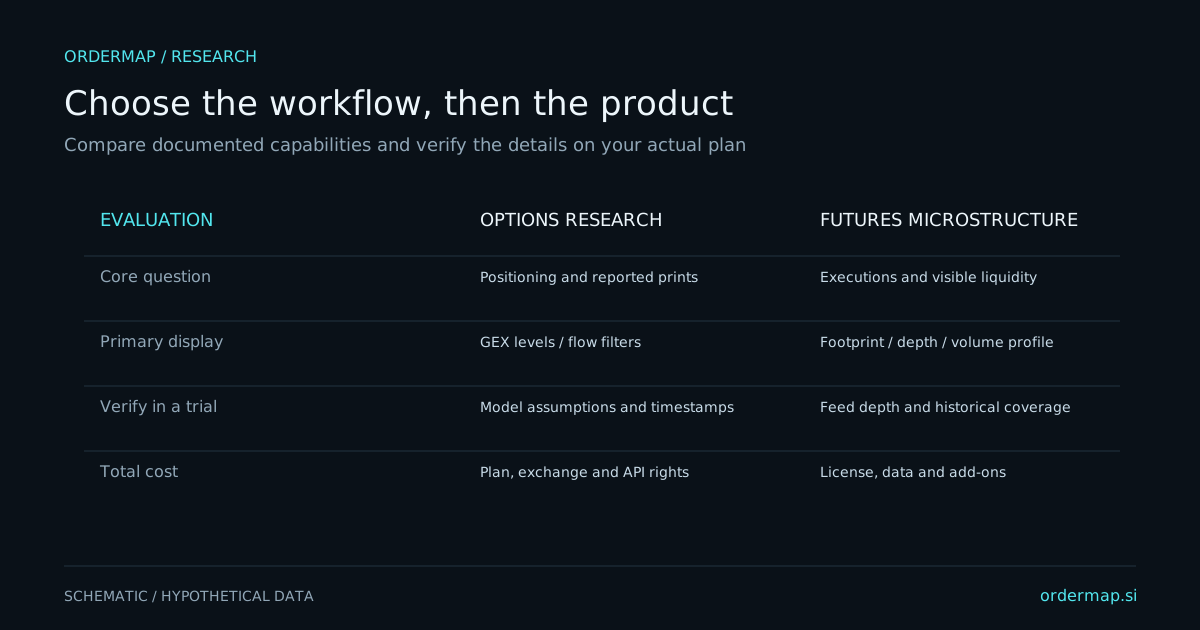
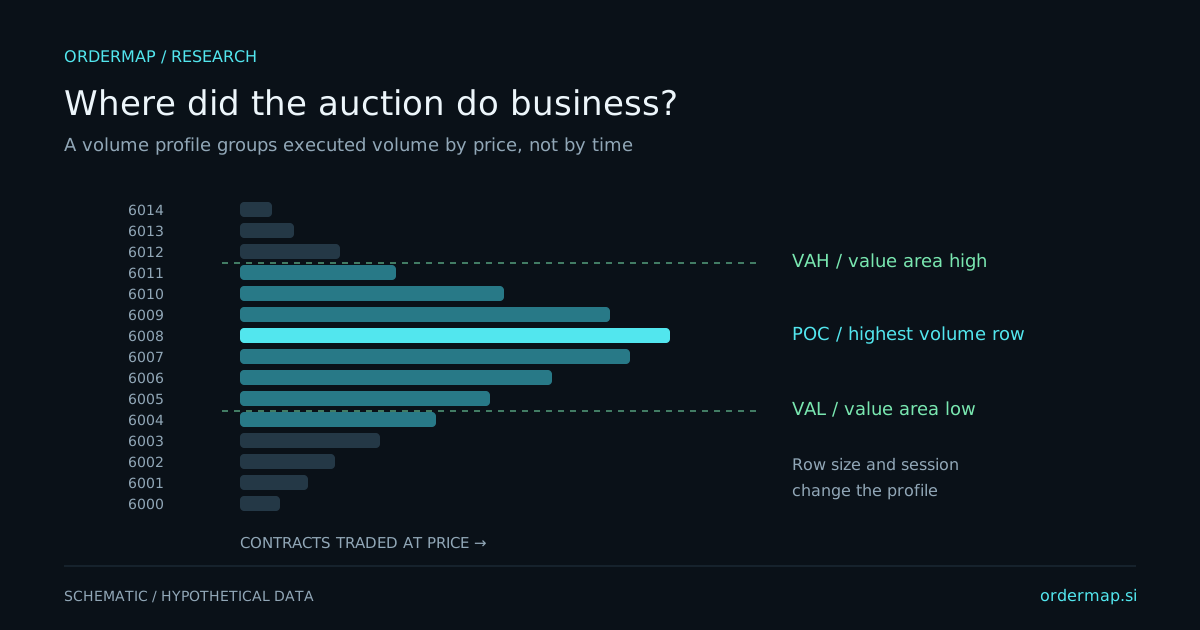
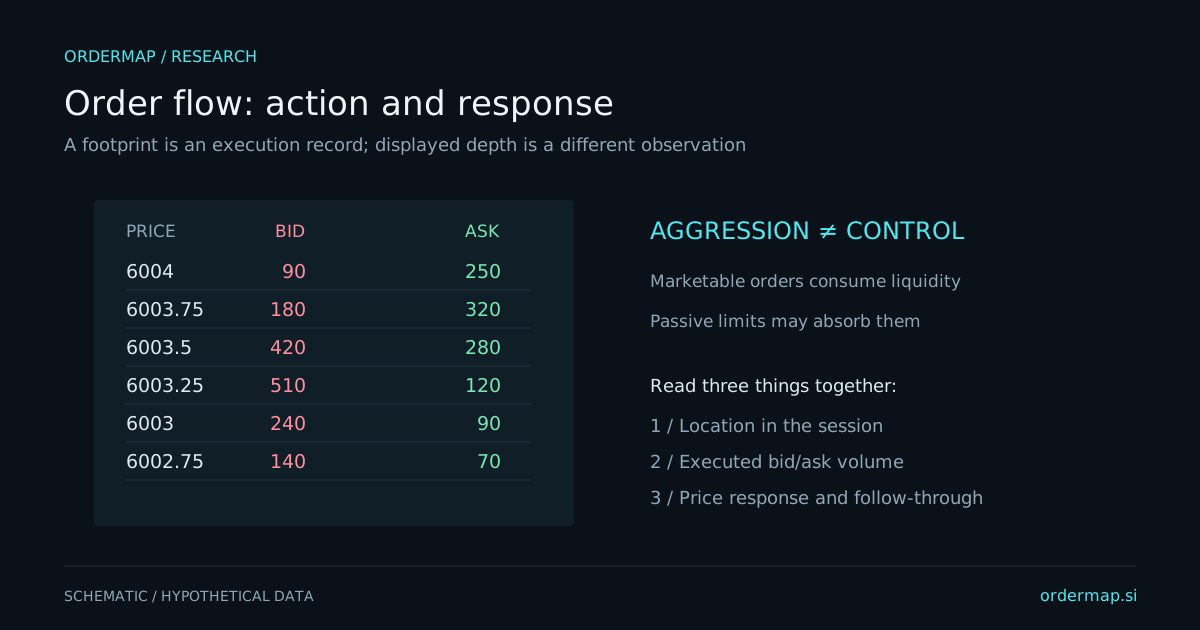
OrderMap combines options exposure views with futures order-flow analysis. The differentiating question is whether you want to keep the path from an options reference to a futures footprint and executed profile in one terminal. You should still evaluate the options model on its own terms before adding auction confirmation.
| Decision layer | SpotGamma material to examine | OrderMap evaluation focus |
|---|---|---|
| Options positioning | TRACE and inventory-model descriptions | Exposure definition, expiry filters and observation time |
| Intraday options activity | HIRO methodology and covered symbols | Observed options flow and classification limits |
| Futures response at a reference | Confirm the exact desired integration | Footprint, session profile and captured liquidity |
| Review discipline | Historical access for the chosen product | Retained coverage, replay scope and missing intervals |
| Operational fit | Current package and platform support | Account permissions and current plan availability |